

MBA-Marketing

TAPMI MBA Marketing – Specialist MBA in Marketing & Brand Management

Master of Business Administration – Marketing (MBA-Marketing) 

About the program: 

The distinctive strength of TAPMI’s MBA-Marketing program lies in its applied, market-facing orientation. Students receive early and deep exposure to marketing while retaining a strong general management foundation. More than classroom familiarity, the programme emphasizes application through cases, simulations, live projects, fieldwork, presentations, research assignments and industry interactions. 

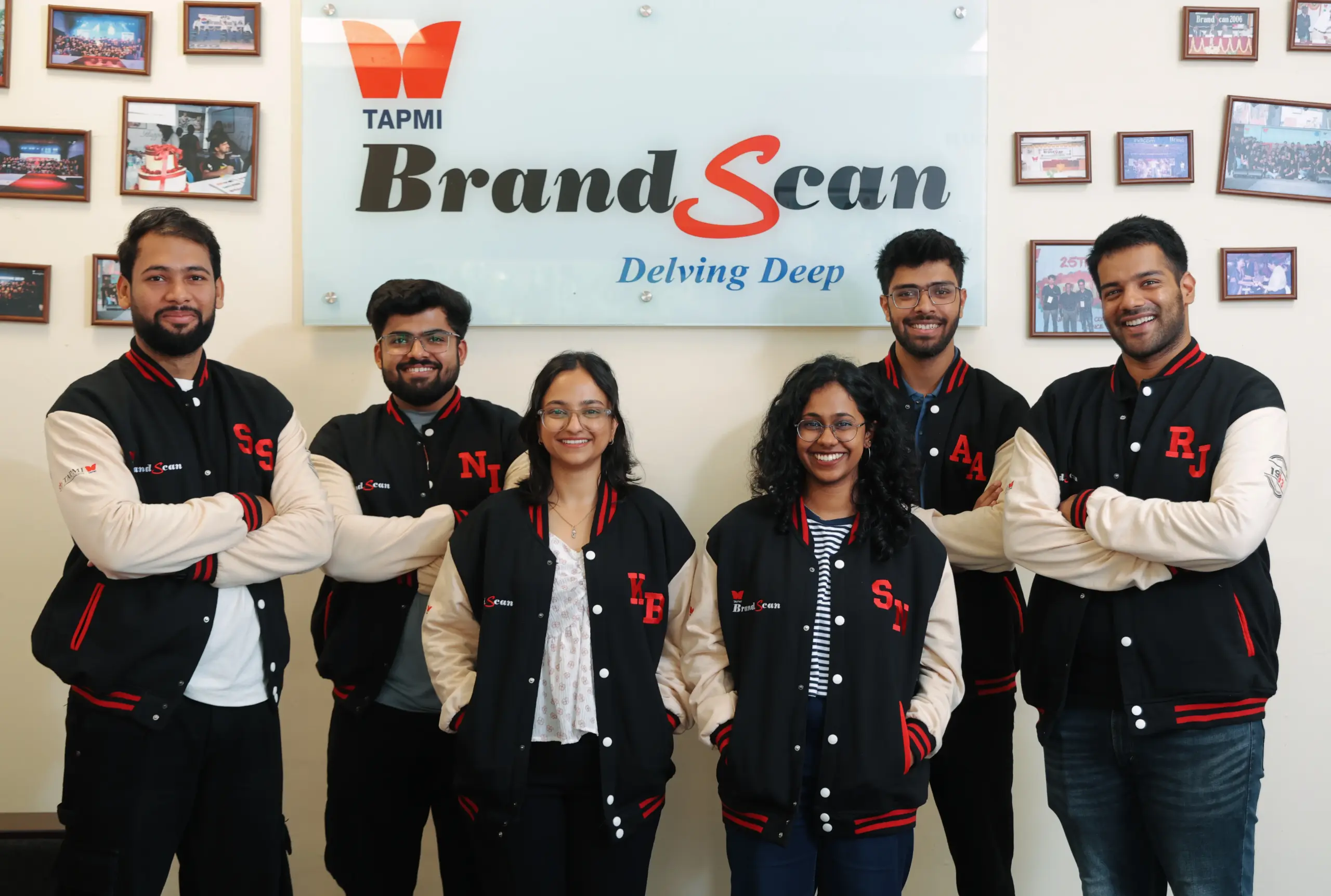
BrandScan is a flagship feature of the program. It enables students to work on live business challenges, collect and analyse consumer and market data, develop insights and present recommendations. The program also includes applied learning through product management projects, sales and distribution fieldwork, rural and retail immersion, advertising and media planning assignments, CRM and automation exposure, marketing research projects, and corporate-style presentations. 

The curriculum is continuously reviewed using recruiter feedback, alumni inputs, job-profile analysis, benchmarking and area-level curriculum discussions. Courses and modules increasingly reflect contemporary areas such as AI-enabled marketing, CRM and analytics, digital and performance marketing, omnichannel retailing, marketing metrics, product management, key account management and B2B/enterprise selling. Industry-led workshops, guest sessions, practitioner inputs and career-readiness interventions further strengthen the link between classroom learning and market expectations. 

Overall, the program differentiates itself by training students not only to understand marketing and selling concepts, but to work with markets, customers, channels, brands, data, and revenue realities. 

Industry Relevance: 

Marketing roles are changing rapidly. Organizations increasingly need graduates who can combine customer understanding with sales execution, channel management, digital capability, analytics, product thinking and revenue orientation. TAPMI’s MBA-Marketing program responds to this shift by preparing students for market-facing, customer-facing, and business-development roles across sectors. 

The program goes beyond a narrow view of marketing as advertising or brand communication. Students are exposed to consumer behaviour, marketing research, brand management, sales and distribution, B2B marketing, personal selling, retail and omnichannel strategy, CRM and analytics, digital and performance marketing, product management, pricing, key account management and marketing metrics. The emphasis is on helping students connect market insight with business action. 

The program is relevant for sectors such as FMCG/FMCD, BFSI and fintech, technology/SaaS, retail and e-commerce, manufacturing and industrial markets, consulting and research, startups, and B2B/enterprise businesses. It prepares students for roles where organizations expect commercial judgment, customer orientation, persuasive communication, problem-solving ability, relationship management and execution discipline. The curriculum also emphasizes AI-enabled marketing, CRM analytics, omnichannel retailing, performance marketing, product management, key account management, and IT/infrastructure sales to keep the program aligned with emerging recruiter needs. 

Ideal Candidate Profile: 

The MBA-Marketing program is suited for applicants who are curious about markets, customers, brands, sales, business growth, and technology-enabled marketing. Ideal candidates should have a strong academic foundation, clear communication ability, comfort with numbers and evidence-based decision-making, and the willingness to work in customer-facing and revenue-facing environments. Prior work experience is welcome, especially in sales, business development, retail, digital, analytics, customer service, entrepreneurship or market-facing roles, though it is not mandatory. 

The program will particularly benefit students who enjoy understanding why customers buy, how brands compete, how sales and distribution systems work, and how organizations create and capture value in competitive markets. Candidates should be open to fieldwork, presentations, live projects, simulations, case discussions and team-based assignments. They should also have the temperament to handle ambiguity, deadlines, persuasion, negotiation and stakeholder interaction. 

The programme is appropriate for students aspiring to build careers in sales, business development, key account management, brand and category management, digital marketing, CRM and customer engagement, product management, market research, retail, omnichannel roles, B2B/enterprise sales and growth-oriented managerial roles. 

Placement Highlights: 

MBA-Marketing students are placed in a wide range of market-facing, sales, business-development, digital, product, CRM, retail, category, research, and customer-facing roles. Common career pathways include Area Sales Manager, Sales Trainee, Business Development Executive, Key Account/Enterprise Sales, Brand/Category roles, Digital Marketing, CRM and Customer Engagement, Product Management/Product Analyst, Retail/Omnichannel roles, and Market Research/Consumer Insight roles. 

For the graduating batch 2023-2025, the highest CTC was INR 19.59 LPA, and the average CTC was INR 13.72 LPA. For the graduating batch 2024-2026, the highest CTC was INR 26.45 LPA, and the average CTC was INR 14.73 LPA. 

On internships, the batch 2024-2026 had 52 students, with 39 institute-facilitated placements and 13 self-sourced internships. The highest stipend was INR 1,25,000, and the average stipend was INR 38,897. The batch 2025-2027 had 59 students, with 48 institute-facilitated placements and 11 self-sourced internships. The highest stipend was INR 2,00,000, and the average stipend was INR 37,362. 
Learning by Doing

What truly sets TAPMI’s MBA Marketing program apart is its hands-on approach. Every student is required to work on live projects alongside their summer internship, offering valuable industry exposure. The mentorship program further enhances this practical learning, where students benefit from the guidance of TAPMI alumni who hold senior leadership positions across industries. In the second year, students specialize in specific sectors, learning directly from industry professionals who bring current, real-world knowledge to the classroom.

Moreover, the program is committed to producing well-rounded marketers with a broad perspective on the industry. TAPMI’s strong faculty base, with expertise in academia and industry, ensures that students are equipped with theoretical knowledge and practical skills. This blend of applied research, diverse industry experience, and teaching excellence forms the foundation of the program’s success in placing graduates in marketing roles across sectors like Fast Moving Consumer Goods (FMCG), Consumer Durables, Retail, Banking, and Financial Services.

Curriculum and Structure

Program Structure

During the two-year MBA program, students undergo 976 hours of classroom and non-classroom learning.  A student admitted into the MBA Marketing program will complete 600 hours in Year 1. The remaining 376 hours will be completed in Year 2 of the program


Year 1


Term I
Sl. No. Course Name Student

Credits (*)

Classroom Hours
1 Basics of Accounting 1 10
2 Learning through Alternative Pedagogies (LEAP) 1 10
3 Excel Basics 1 10
4 Managerial Statistics 3 30
5 Marketing Management -1 3 30
6 Managerial Economics 2 20
7 Financial Accounting 2 20
8 Managerial Communication 2 20
9 Organizational Behaviour 3 30
10 Sustainability, Responsibility, Managerial Ethics (SRME) 2 20
11 Comprehensive Test- I 1 0
TOTAL TERM – I 21 200
Term II
Sl. No. Course Name Student

Credits (*)

Classroom Hours
1 Operations Management 3 30
2 Marketing Management – II 2 20
3 Management Accounting 2 20
4 Macro Economics 2 20
5 Business Communication and Presentations 2 20
6 Consumer Behaviour 3 30
7 Introduction to Digital Marketing 2 20
8 Brand Management 3 30
9 Personal Selling and Sales Negotiations 3 30
10 Comprehensive Test – II 1 0
TOTAL TERM – II 23 220
Term III  
Sl. No. Course Name Student

Credits (*)

Classroom Hours
1 Strategic Management 2 20
2 Human Resources Management 2 20
3 Advanced Excel Skills (MOOC) 1 10
4 Financial Management 3 30
5 IT for Business 2 20
6 Business Research Methods 2 20
7 Sales and Distribution Management 3 30
8 Advertising and Media Planning 3 30
9 Integrative Assessment 1 0
TOTAL TERM – III 19 180
TOTAL Credits TERM – (I-III) 63 600


Summer Term
Course Name Student

Credits (*)

Classroom Hours
Summer Internship (SIP)* 6 0
Term IV  
Sl. No. Course Name Student

Credits (*)

Classroom Hours
1 Legal Aspects of Business 2 20
2 Services Marketing 3 30
3 B2B Marketing 3 30
4 Applied Marketing Strategy 3 30
5 Supply Chain Management 2 20
6 Elective 1 2 20
TOTAL- TERM IV 15 150
Term V  
Sl. No. Course Name Student

Credits (*)

Classroom Hours
1 Advanced Digital Marketing 2 20
2 Advanced Marketing Analytics and Research 3 30
3 Retail Management 3 30
4 Customer Relationship Management 2 20
5 Brand Scan 4 0
6 Elective 2 2 20
TOTAL- TERM V 16 120
Term VI  
Sl. No. Course Name Student

Credits (*)

Classroom Hours
1 Marketing Strategy 3 6
2 Rural Marketing 3 30
3 Data Visualization in PowerBi 1 10
4 Pricing Strategy 2 20
5 Business Leadership 2 20
6 Society, Environment, Values & Attitudes (SEVA) 4 0
7 Elective 3 2 20
TOTAL- TERM VI 17 106
TOTAL Credits TERM – (I-VI) 117 976


The courses shown above are as per the existing scheme at the Institute. These are meant to be indicative. TAPMI has a practice of revising its curriculum regularly, due to which the above courses and credits may be subject to change, within the bounds of Regulatory Rules/Norms. It is a policy of the Institute to drop elective courses with less than the pre-defined criteria for registrations.


List of Electives:


SI No. Course Name Term Student

Credits (*)

Classroom

Hours

1 Management of Sales Force IV 2 20
2 AI for Management IV 2 20
3 Sustainable Marketing IV 2 20
4 Marketing Performance Metrics V 2 20
5 Product and Innovation Management V 2 20
6 Key Account Management VI 2 20
7 Social Marketing VI 2 20


* Student credits are based on both classroom hours & non-classroom hours


Note: This will be a floating basket of specialization electives and new cutting-edge courses will be considered in the offerings. For each term, a total of 2-3 electives shall be offered to students and the elective receiving the maximum number of subscriptions will be taught in that particular term.

1. Experiential Learning through BrandScan

Work on real, live marketing challenges with leading companies like ITC, CavinKare, HP, and Reliance through BrandScan, India’s oldest and longest-running market research initiative. This hands-on experience bridges the gap between theory and practice, making it a mandatory component of the MBA-MKT curriculum.

2. Strong Sales Orientation

The MBA–MKT program at TAPMI is highly valued by recruiters for its strong sales focus and industry-relevant curriculum. Students gain practical expertise through courses like Personal Selling & Sales Negotiations, Sales & Distribution Management, and B2B Marketing, complemented by live projects such as BrandScan. Advanced electives, such as Management of Salesforce and Key Account Management, along with workshops from Industry experts on GTM strategies and the Art of Storytelling, develop strategic and operational sales capabilities, preparing graduates for leadership roles in sales, channel management, and customer relationship management.

3. Global Accreditation & Fast-Track Qualifications

The program is accredited by the Chartered Institute of Marketing (CIM), UK enabling students to earn globally recognized qualifications with up to 66% reduced duration and exemptions in assessments.

4. Strong Industry Linkages & Mentorship

Students benefit from mentorship by alumni in leadership roles and courses delivered by industry professionals. Live projects, summer internships, and workshops with experts from firms such as HUL, ITC, and Salesforce provide deep industry exposure. 

5. Experienced Faculty

Learn from 14 full-time and 2 adjunct faculty with over 100 years of cumulative industry experience and 230 years of academic expertise, holding PhDs from premier institutions in India and abroad. 

6. Specialized & Evolving Curriculum

Our curriculum is co-created with industry experts and continually updated to incorporate emerging technologies and best practices. Courses range from AI for Marketing and Marketing Analytics to niche areas like Luxury Marketing and Hospitality & Tourism Marketing.

7. International Exposure

Access student exchange opportunities through MOUs with 13 global universities, including Montpellier University (France), Loughborough University (UK), and the University of Akron (USA).